



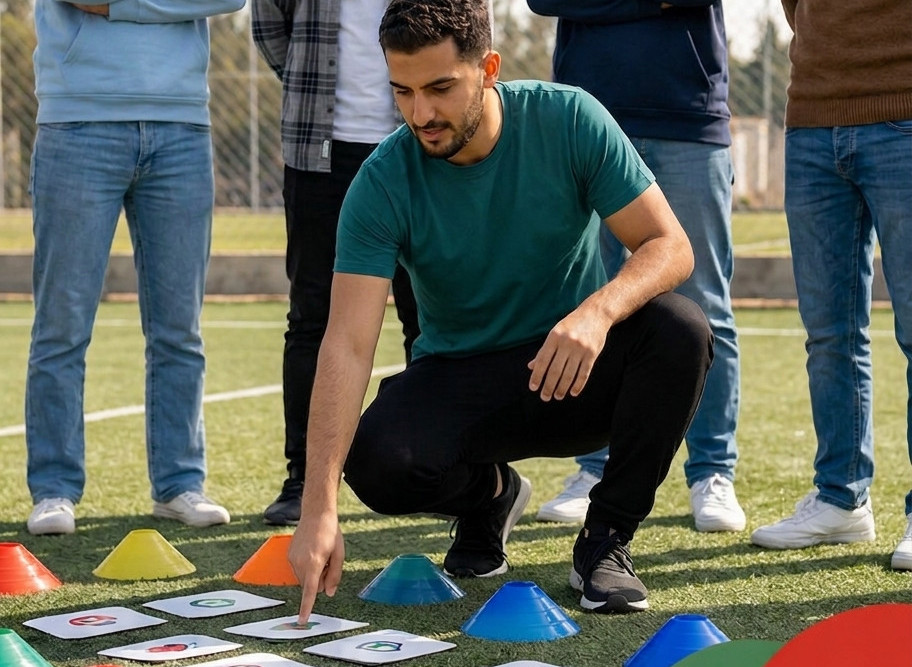
How Physical Team Games Improve Problem-Solving Skills
How Physical Team Games Improve Problem-Solving Skills Introduction
Problem-solving is one of the most valuable skills in education, business, and everyday life. Organizations and educational institutions increasingly seek innovative ways to develop this ability among participants.
Physical team games provide a unique environment where individuals face challenges, collaborate, and discover solutions together.
Why Problem-Solving MattersStrong problem-solving skills enable individuals to:
-
Make better decisions
-
Overcome challenges
-
Improve productivity
-
Think creatively
-
Adapt to change
Unlike theoretical exercises, physical team games require participants to apply their thinking immediately.
Teams must:
-
Analyze situations
-
Identify obstacles
-
Develop strategies
-
Execute solutions
Many challenges cannot be solved individually. Participants learn to combine different perspectives and ideas to reach the best outcome.
Developing Critical ThinkingInteractive games encourage participants to evaluate options, predict outcomes, and refine their strategies based on results.
Applying Skills Beyond the GameThe lessons learned through team games extend into workplaces, classrooms, and daily life.
Participants become more confident when facing future challenges because they have practiced solving problems in dynamic environments.
ConclusionPhysical team games are powerful tools for developing problem-solving abilities. By combining teamwork, creativity, and action, these activities help participants build skills that remain valuable long after the game ends.